|

 Southwest
Irrigation, LLC
Southwest
Irrigation, LLC|
|
|
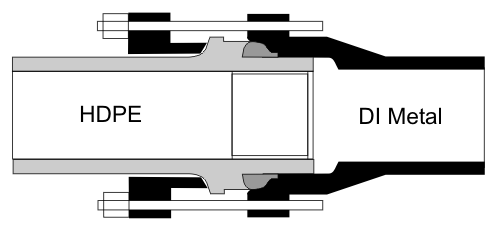
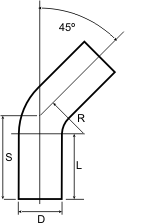
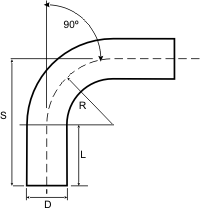
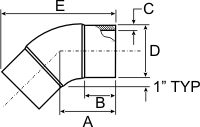
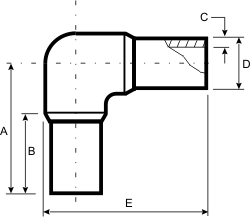
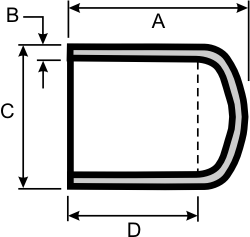
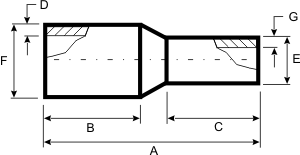
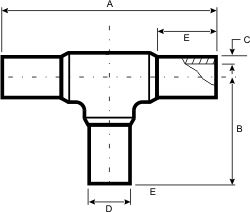
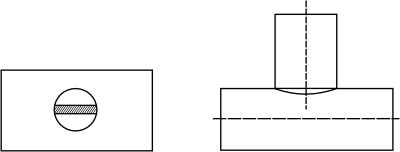
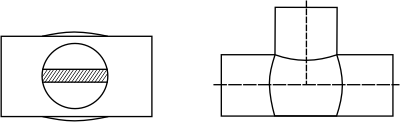
HDPE fittings are injection or compression molded, fabricated using sections of pipe or machined from molded plates. Injection molding is used to produce fittings up through 12-inches in diameter while fittings larger than 12-inches are normally fabricated. Depending upon the configuration required, fittings are constructed by joining sections of pipe, machined blocks, molded fittings and/or HDPE sheets. Each fitting design is thoroughly analyzed prior to construction in an effort to locate any areas that may compromise the pressure rating of the system into which and fitting will be installed. Custom fittings are fabricated according to ASTM F2206-02 Standard Specifications for Fabricated Fittings of Butt-Fused Polyethylene (PE) Plastic Pipe, Fittings, Sheet Stock, Plate Stock or Block Stock. This specification includes requirements for materials, design, workmanship, minimum dimensions, marking, test methods and quality control. In addition, the following specifications are continually referenced by engineers.
|
 Formulated
in the 1950’s, high density polyethylene plastic (HDPE)
has subsequently been subjected to extensive and rigorous real
world application testing to an extent surpassing any “standard” test
regimen usually applied to plastic materials. HDPE pipe has
proven itself around the globe as the best material choice
for water,
sewer, natural gas distribution, oil and gas gathering, drainage,
buried conduit and now even safety systems for nuclear power
plants. Few materials have as wide an application base due
to its resistance to a wide variety of chemicals, environmental
conditions and its suitability for both low and high pressure
applications.
Formulated
in the 1950’s, high density polyethylene plastic (HDPE)
has subsequently been subjected to extensive and rigorous real
world application testing to an extent surpassing any “standard” test
regimen usually applied to plastic materials. HDPE pipe has
proven itself around the globe as the best material choice
for water,
sewer, natural gas distribution, oil and gas gathering, drainage,
buried conduit and now even safety systems for nuclear power
plants. Few materials have as wide an application base due
to its resistance to a wide variety of chemicals, environmental
conditions and its suitability for both low and high pressure
applications. 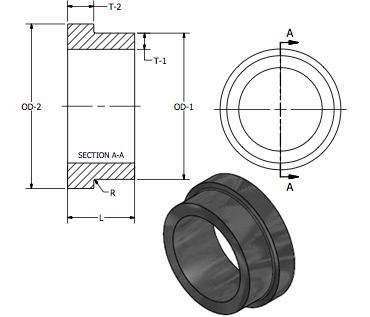










|
|||
|
|
|||